Why Knee Pain and Joint Care Are Important
Knee joints play a major role in supporting body weight and maintaining mobility. From walking and climbing stairs to exercising and daily activities, healthy knee joints are essential for an active lifestyle. Unfortunately, knee pain and joint stiffness have become increasingly common due to sedentary habits, aging, obesity, sports injuries, and arthritis.
Ignoring joint discomfort can lead to long-term mobility problems and chronic pain. Proper knee care combined with physiotherapy can help improve flexibility, strengthen muscles, and protect joints from further damage.
Common Causes of Knee Pain and Joint Problems
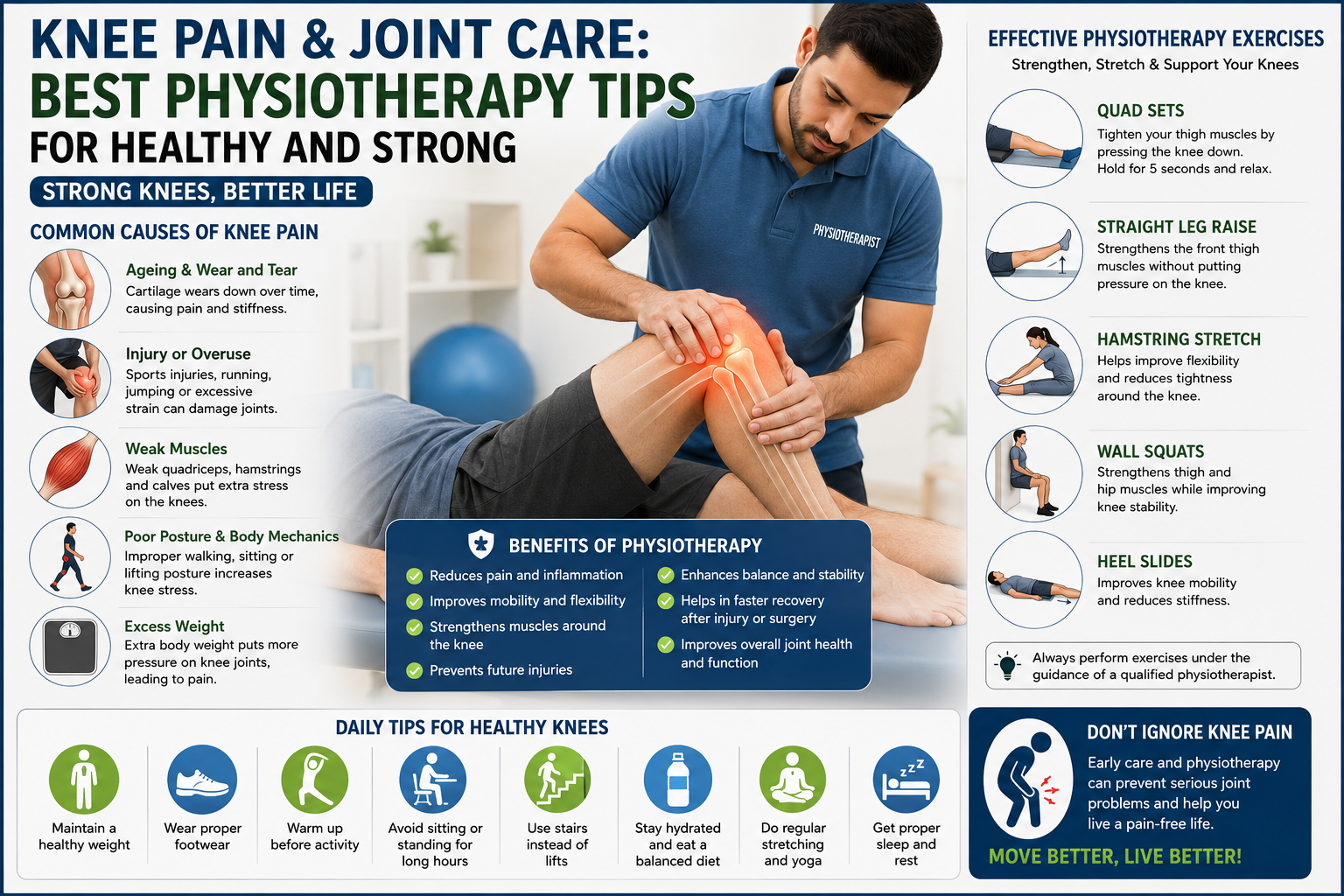
Knee pain can occur for several reasons. Some conditions develop gradually over time, while others may result from sudden injury or strain.
- Osteoarthritis
- Rheumatoid arthritis
- Sports injuries
- Ligament tears
- Muscle weakness
- Obesity and excess body weight
- Poor posture and incorrect walking habits
- Age-related cartilage degeneration
- Overuse during physical activity
Symptoms You Should Not Ignore
Many people ignore early warning signs of joint problems until the pain becomes severe. Early diagnosis and physiotherapy treatment can help prevent complications.
- Knee stiffness
- Swelling around joints
- Pain while walking or climbing stairs
- Cracking or popping sounds
- Reduced flexibility
- Difficulty standing for long periods
- Weakness in the legs
How Physiotherapy Helps in Knee and Joint Care
Physiotherapy is one of the most effective non-surgical approaches for managing knee pain and improving joint health. It focuses on strengthening muscles, improving flexibility, correcting posture, and reducing pressure on affected joints.
A physiotherapist creates a personalized rehabilitation plan based on the patient’s age, condition, mobility level, and pain severity.
Benefits of Physiotherapy for Joint Health
- Improves joint flexibility
- Strengthens supporting muscles
- Reduces pain and inflammation
- Enhances mobility and balance
- Improves posture and walking patterns
- Helps prevent future injuries
- Supports recovery after surgery
- Reduces dependency on painkillers
Best Physiotherapy Treatments for Knee Pain
1. Strengthening Exercises
Exercises targeting the quadriceps, hamstrings, calves, and hip muscles help stabilize the knee joint and reduce stress during movement.
2. Stretching Therapy
Stretching exercises improve flexibility and reduce stiffness around joints and muscles.
3. Manual Therapy
Hands-on techniques improve joint mobility, blood circulation, and muscle relaxation.
4. Electrotherapy
Treatments such as ultrasound therapy, TENS, and IFT therapy help reduce pain and inflammation naturally.
5. Posture and Gait Training
Correct posture and proper walking techniques reduce pressure on the knees and improve movement efficiency.
Best Exercises for Healthy Knee Joints
Regular low-impact exercises help maintain joint flexibility and muscle strength.
- Straight leg raises
- Quadriceps strengthening
- Hamstring stretches
- Heel slides
- Mini squats
- Step-up exercises
- Stationary cycling
- Walking exercises
Daily Tips for Better Joint Care
- Maintain healthy body weight
- Avoid prolonged sitting
- Stay physically active
- Use proper footwear
- Warm up before exercise
- Follow correct sitting posture
- Avoid sudden twisting movements
- Take breaks during long working hours
Foods That Support Joint Health
A balanced diet also plays an important role in maintaining healthy joints and reducing inflammation.
- Leafy green vegetables
- Milk and dairy products
- Nuts and seeds
- Omega-3 rich foods
- Fresh fruits
- Protein-rich foods
- Vitamin D and calcium sources
When to Seek Professional Help
You should consult a physiotherapist or healthcare professional if knee pain persists for several days or affects your normal activities.
- Difficulty walking
- Persistent swelling
- Joint instability
- Severe pain during movement
- Limited range of motion
- Pain after injury or fall
Can Knee Problems Be Prevented?
Many knee and joint problems can be prevented through regular exercise, maintaining a healthy lifestyle, and practicing proper body mechanics. Early physiotherapy intervention can help reduce the risk of chronic pain and long-term joint damage.
Conclusion
Knee pain and joint problems can significantly impact daily life if left untreated. Physiotherapy offers safe and effective solutions for improving mobility, reducing pain, and protecting joint health naturally.
With regular exercises, proper posture, healthy lifestyle habits, and professional physiotherapy guidance, individuals can maintain strong and healthy joints for years to come.